Selling a Waterfront Home in Huntington Harbour? What Homeowners Should Know Before Listing in 2027
From private docks and seawalls to recent high-tide flooding, here's what local homeowners should consider before putting their property on the market.
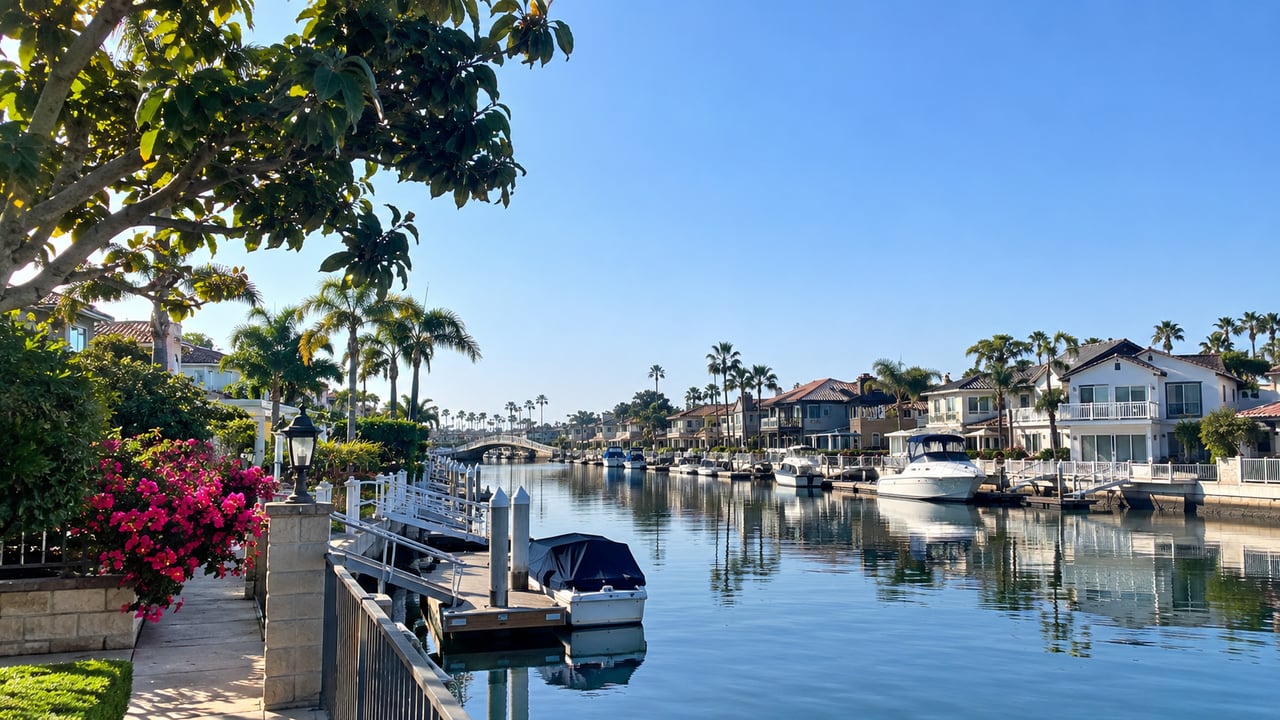
There is something distinctive about owning a waterfront home in Huntington Harbour. The view from the backyard, the boats moving through the channels, and the possibility of stepping onto a private dock are part of a lifestyle that is difficult to replicate elsewhere in Huntington Beach.
But selling a waterfront property involves more than showcasing the view. Buyers may have questions about the dock, seawall, shoreline maintenance, insurance, flood history, and the property's relationship to the water.
Those questions have become particularly relevant following the late-October 2026 tidal flooding that affected portions of Huntington Harbour and nearby Sunset Beach. The City of Huntington Beach declared a local emergency after unusually high tides caused flooding and damage in parts of the coastal community.
For homeowners considering a sale in 2027, this is a good time to organize property records, understand the condition of waterfront improvements, and prepare for a more informed conversation with prospective buyers.
What makes selling a Huntington Harbour waterfront home different?
- Private docks and waterfront improvements require property-specific documentation.
- Seawall and bulkhead condition can be important to buyers.
- Recent tidal flooding makes property-specific flood history especially relevant.
- Insurance, permits, maintenance records, and disclosures deserve careful attention.
- Waterfront and interior homes should not automatically be compared as if they offer the same features.
1. Huntington Harbour Is More Than a Waterfront Address
Located in the northwestern part of Huntington Beach, Huntington Harbour is a residential waterfront community organized around interconnected channels and islands.
The City of Huntington Beach's Harbour Commission history and overview identifies six islands in the harbor area, five of which are man-made: Admiralty, Davenport, Gilbert, Humboldt, and Trinidad. The community covers approximately 1.4 square miles and has around 7,000 residents.
Each property can offer a different relationship with the water. Some homes sit directly along the channels with private docks. Others are located on interior streets or within residential communities where waterfront access and shared amenities vary.
This distinction matters when preparing a home for sale. A property with direct channel frontage and a private dock offers different features from a home that simply belongs to the broader Huntington Harbour community.
Sellers should be specific about what their property actually includes. Dock access, ownership, permitted improvements, and any shared-use arrangements should be verified rather than assumed.
2. The Recent Tidal Flooding Makes Property History Important
In late October 2026, unusually high tides caused significant flooding in portions of Huntington Beach, including Huntington Harbour and Sunset Beach.
According to the city's October 30 emergency report, flooding between October 26 and October 29 affected several areas, including Bayview Drive, North Pacific Avenue, Park Avenue, and other locations in the Harbour. The city reported damage to homes and other structures, road closures along Pacific Coast Highway, and emergency protective measures.
A Los Angeles Times report published October 30 cited city officials reporting damage to 114 homes and other structures across the affected coastal areas. That figure should not be interpreted as the number of damaged Huntington Harbour homes alone.
This distinction is important. Not every home in Huntington Harbour experienced flooding, and a community-wide report cannot establish the flood history of an individual property.
If you are preparing to sell, gather accurate information about your own property. This may include:
- Records of any past water intrusion or flooding.
- Repair invoices and contractor reports.
- Photographs documenting damage and completed repairs.
- Information about drainage, pumps, barriers, or other protective measures.
- Relevant insurance claims and available documentation.
If your home was not affected, avoid making broad statements about the entire neighborhood. Property-specific information is more useful to buyers than general assurances.
3. Your Seawall and Bulkhead Deserve Attention
For many waterfront properties, the seawall or bulkhead is one of the most important physical features to understand before listing.
These structures help separate the property from the waterway. Their condition, construction history, and maintenance can become important topics during a buyer's inspection and due diligence.
Before listing, consider gathering:
- Available original construction or installation records.
- Repair and maintenance invoices.
- Engineering evaluations, if available.
- Records of previous structural work or modifications.
- Applicable permits and approvals.
Do not assume that a seawall is in good condition simply because it looks acceptable from the patio or dock. A qualified professional can help evaluate visible concerns and determine whether further inspection is appropriate.
Also, do not assume that every repair or replacement can be completed without regulatory review. Depending on the scope and location of the work, city and coastal permitting requirements may apply.
4. Private Docks Can Be a Selling Feature, but Documentation Matters
A private dock is one of the features that can make a Huntington Harbour property especially appealing to boating enthusiasts. However, buyers may want more information than simply knowing that a dock is present.
Consider organizing documentation that answers questions such as:
- Is the dock privately owned or shared?
- What improvements have been made, and when?
- Are permits or approvals available?
- Are there maintenance or repair records?
- Are there any known restrictions affecting dock use or boat access?
Dock dimensions, condition, access, and permitted uses should be verified for the individual property. Do not advertise a boat capacity, slip arrangement, or navigational clearance without reliable documentation.
There is also a current public infrastructure project worth distinguishing from private residential improvements. In 2026, Huntington Beach pursued replacement of a public dock adjacent to the Huntington Harbour Yacht Club on Warner Avenue. The city described a new modular floating dock, gangway, and utility improvements. This is a public facility project; it does not mean private residential docks are being replaced or upgraded.
5. Prepare for Questions About Flood Maps and Insurance
Flood exposure is an important part of evaluating a waterfront property, but it should never be reduced to a general statement about the entire harbor.
FEMA flood-zone designations, local flood information, property elevation, drainage, and actual water intrusion history are separate pieces of information. A flood map is not a guarantee that a property will or will not experience flooding.
Sellers should obtain current property-specific information and avoid relying on a neighboring property's flood-zone status or insurance arrangements.
Buyers may also ask about the availability and cost of flood insurance. Sellers should not promise that a buyer can obtain coverage at the seller's current rate. Insurance eligibility, pricing, coverage terms, and underwriting can differ between owners and properties.
If you are preparing to list, consider gathering your current insurance declarations, available flood-related reports, and documentation of any known claims. A qualified insurance professional can help clarify coverage questions.
6. Be Thorough With California Real Estate Disclosures
Waterfront sellers should pay particular attention to the accuracy and completeness of property disclosures.
California Civil Code Section 1103 addresses natural hazard disclosures, including certain designated flood hazard areas. The statutory Natural Hazard Disclosure Statement identifies whether a property lies within specified mapped hazard areas, subject to the law's requirements.
This is not a substitute for the seller's broader obligation to disclose known material facts about the property. If there has been flooding, water intrusion, structural repair, or another known condition, discuss the appropriate disclosure process with your real estate professional and, when necessary, a qualified attorney.
Keep supporting records organized. Accurate disclosures, repair documentation, and clear answers can help reduce confusion during the transaction.
7. How Should You Prepare a Huntington Harbour Home for Sale?
The waterfront setting is naturally a major part of the property's appeal. The goal is to present that lifestyle while making it easy for buyers to understand the home's condition and ownership details.
Start with the waterfront areas
Review the dock, seawall, exterior surfaces, patio, and landscaping. Address routine maintenance and obtain professional advice if you notice cracking, movement, corrosion, or other concerns.
Make the view part of the presentation
Clean windows, tidy outdoor furniture, and well-maintained dock areas can help buyers appreciate the connection between the home and the water.
Organize the paperwork early
Gather available permits, repair invoices, dock information, inspection reports, insurance documents, and relevant maintenance history before the home goes live.
Use accurate, property-specific marketing
Describe the actual waterfront features of the home. If it has a private dock, explain the documented details. If it offers a channel view without direct dock access, communicate that accurately.
8. Pricing a Waterfront Property Requires More Than a Citywide Average
Huntington Harbour waterfront homes should not automatically be compared with every property in Huntington Beach or even every home in ZIP code 92649.
Relevant comparable sales may need to account for direct water frontage, dock features, lot configuration, seawall condition, renovations, interior finishes, and the property's location within the harbor.
Even two homes on the same island can have meaningful differences. One may have a different channel position, outdoor layout, dock configuration, or level of updating.
A thoughtful pricing strategy should begin with recent comparable sales and a close review of the property's features and condition. Asking prices alone do not establish market value.
For homeowners considering a 2027 sale, preparing early can provide time to collect records, address maintenance, and understand the competition before choosing a listing date.
Thinking About Selling Your Huntington Harbour Home?
Waterfront ownership in Huntington Harbour comes with features that deserve a more detailed approach to selling. The dock, seawall, property history, location, and overall condition can all be relevant to how buyers evaluate a home.
The recent high-tide events are another reminder that buyers may ask more detailed questions about waterfront properties. The best preparation is not to make broad promises, but to understand your own property's history and have reliable information ready.
Whether your home is on Admiralty Island, Trinidad Island, Humboldt Island, Davenport Island, Gilbert Island, or along one of the harbor's mainland channels, a property-specific strategy is essential.
If selling is on your mind for 2027, start with a conversation about your home's features, recent comparable sales, and what buyers may want to know before making an offer.
Considering Selling Your Huntington Harbour Home?
Your waterfront property deserves a thoughtful selling strategy. Nate and Doris Gruber can help you understand your home's market position, prepare for buyer questions, and plan your next move.
Nate & Doris Gruber
The Group Realty
📞 949-500-2152
📩 [email protected]
🌐 www.TheGroupRealty.com
Sources and Additional Reading
City of Huntington Beach — History and Overview of Huntington Harbour.
City of Huntington Beach — October 2026 local emergency report.
City of Huntington Beach — Huntington Harbour public dock replacement project.
California Environmental Quality Act database — Huntington Harbour Dock Demolition and Replacement notice.
Los Angeles Times — High tides damage 114 structures in Huntington Beach, October 30, 2026.
California Department of Real Estate — Real Estate Law excerpts, including natural hazard disclosure provisions.
California Civil Code Section 1103.2 — Natural Hazard Disclosure Statement.
Market, flood-zone, insurance, dock, and seawall conditions must be verified for each individual property. This article is general real estate information, not legal, engineering, insurance, or flood-risk advice.